Thich Nhat Hanh
The Vietnamese Buddhist monk who survived the Vietnam War, was exiled from his country for thirty-nine years, and taught a generation of Westerners the practice of mindful awareness as a path through suffering.
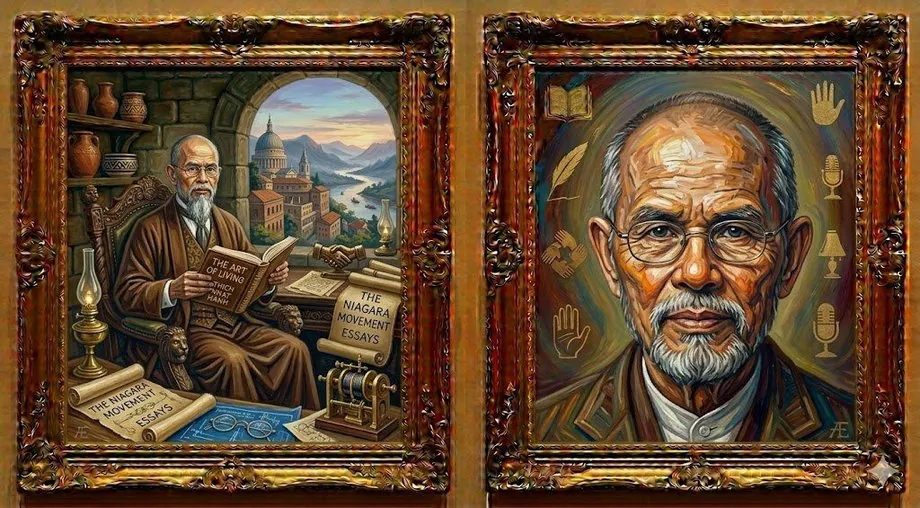
The present moment is the only moment available to us, and it is the door to all moments.Thich Nhat Hanh — Peace Is Every Step, 1991
Thich Nhat Hanh was born in central Vietnam in 1926 and ordained as a Buddhist monk at sixteen. He studied and taught Buddhism in Vietnam through the 1950s, developing the concept of Engaged Buddhism — the idea that the practice of Buddhism must respond to the social and political suffering of the world, not retreat from it. He founded the School of Youth for Social Service in Saigon in 1964, which trained young volunteers to go into war zones to rebuild villages, establish schools, and provide medical care.
He traveled to the United States in 1966 to speak against the Vietnam War and to appeal to both sides for peace. Martin Luther King Jr. met with him, was deeply moved by his combination of Buddhist practice and political courage, and nominated him for the Nobel Peace Prize in 1967. When Nhat Hanh returned to Vietnam he was not permitted to land — both the North and the South had banned him. He lived in exile for the next thirty-nine years, based in the Plum Village monastery in France that he founded in 1982.
He returned to Vietnam in 2005 and again briefly before his death, dying in his home monastery in Hue in January 2022 at ninety-five. He had published more than one hundred books, trained thousands of monks and nuns, and introduced the practice of mindfulness to more Western readers than any other teacher.
Thich Nhat Hanh's philosophical contribution to this library is his account of mindfulness — sati in the Pali tradition — as a complete practice of presence and compassion that can be applied to every moment of ordinary life.
Mindfulness, in his teaching, is not a meditation technique performed for twenty minutes each day. It is a quality of attention brought to every activity — washing dishes, driving, listening to another person, eating. The person who washes dishes mindfully is fully present to the sensation of water, the weight of the dish, the warmth, the smell. They are not planning tomorrow or reviewing yesterday. This moment, fully experienced, is both the practice and the point.
The deeper argument is that suffering arises largely from our relationship to our thoughts and feelings rather than from the thoughts and feelings themselves. The person who is afraid and knows they are afraid, who can observe the fear with the quality of attention that mindfulness cultivates, is in a fundamentally different relationship to that fear than the person who is simply swept away by it. This is the Buddhist parallel to the Stoic dichotomy of control: not changing what arises, but changing the relationship to what arises.
His concept of interbeing — the insight that no person or thing exists independently, that everything arises in relationship to everything else — extends this into an account of human solidarity and environmental ethics. The person who truly sees interbeing cannot remain indifferent to the suffering of others, because that suffering is not separate from their own. This is, in different language, the same insight that drives Schweitzer's Reverence for Life and King's beloved community.
Because of your smile, you make life more beautiful.Thich Nhat Hanh — as attributed
The most accessible introduction to his philosophy — short chapters on mindfulness, compassion, and the practice of presence in ordinary life.
His manual on mindfulness practice — still the clearest practical account of what mindful attention actually involves.
Some links may be affiliate links. They help support the site at no additional cost to you.

